
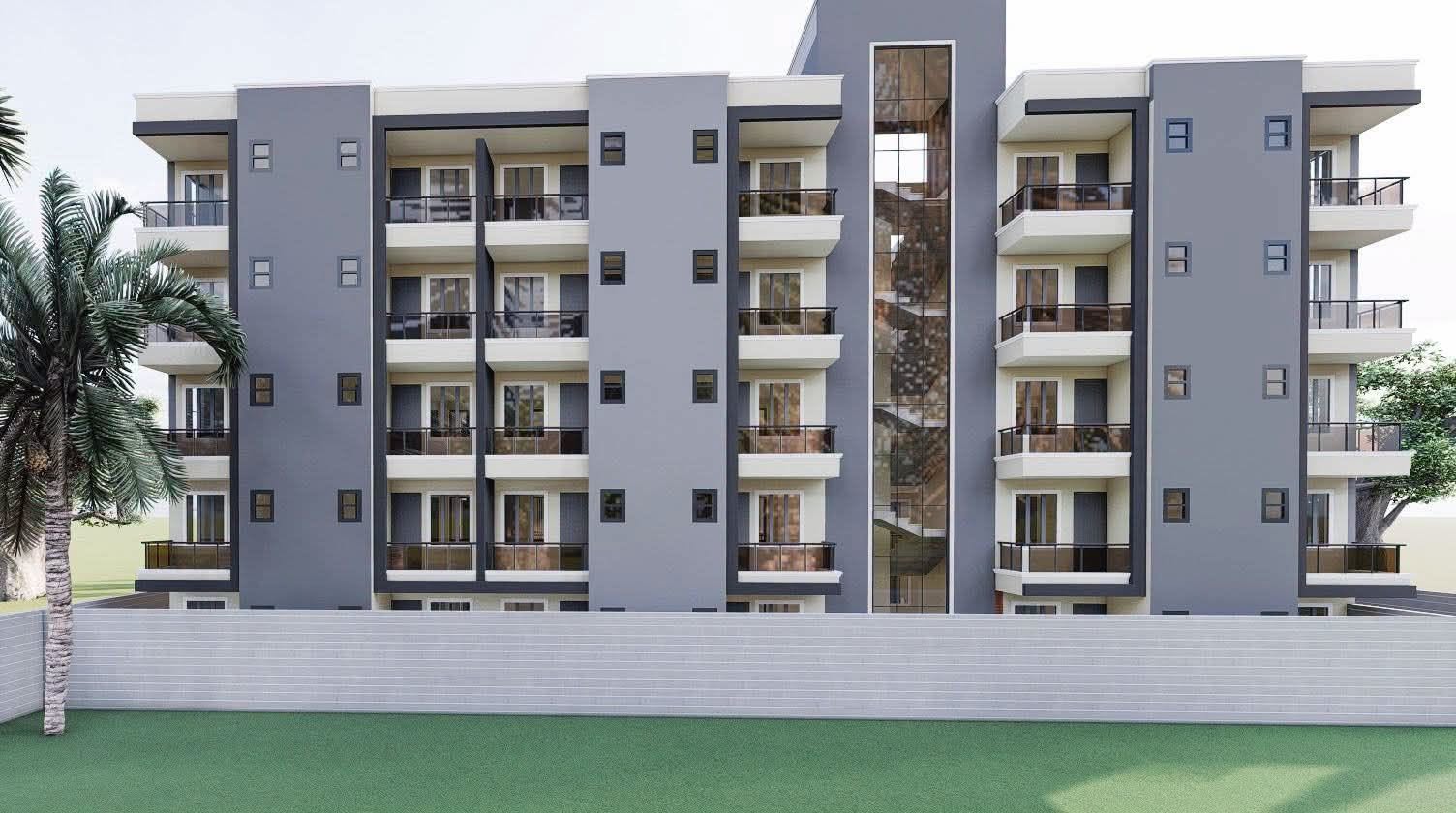
Drive through Kilimani, Ruaka, Kikuyu, Ruiru, Thika, Nakuru or increasingly Kutus and Kerugoya and you will see the same pattern: standalone bungalows on quarter-acre plots giving way to four, five and six-storey apartment blocks. Kenya's urban and peri-urban land is getting more expensive by the year and the only way to make a plot pay for itself in many of these areas is to build up rather than out. Apartment development has become one of the most reliable ways for landowners and investors in Kenya to turn a piece of land into a long-term income stream.
But apartment house plans are a different discipline from designing a single-family home. A poorly planned apartment block does not just look uninspired, it actively loses money for its developer through wasted plinth area, unsellable unit layouts and finishes that do not match the market it was built for. This guide, from the design and quantity surveying team at Earch Designers, walks through what actually makes apartment house plans succeed in the Kenyan market.
1. Understand Your Development Cost Before You Design Anything
Every apartment project carries what quantity surveyors call a development cost: the full sum of consultancy fees, land cost, statutory approvals, construction materials, labour and financing costs required to take the project from bare land to a lettable or sellable building. Developers who skip this exercise and design first, cost later, routinely discover midway through construction that their finishes, unit count or floor count no longer make financial sense.
The smarter sequence is to run the numbers early. Earch Designers built a free construction cost calculator specifically so developers and landowners can get a realistic estimate of what a building of a given size and finish level will cost in the current Kenyan market, before committing to full architectural drawings or a detailed Bill of Quantities. Getting this number right at the start protects your margin at every later stage of the project.
2. Design for Return Per Square Metre, Not Just for Looks
From a developer's perspective, the success of an apartment project is measured in the return generated per square metre of buildable area, not simply in how attractive the elevation looks in a render. Once consultancy fees, land cost, approvals, materials and financing are all accounted for, the project needs to generate returns that comfortably outstrip that total investment. Most commercially viable apartment developments in Kenya are expected to recover their capital investment within roughly 8 to 10 years of operation through rental income or phased unit sales.
This is why plinth area planning matters so much in apartment house plans. Every corridor, lightwell and lobby that does not translate into sellable or rentable space is buildable area that earns nothing. A well-designed apartment plan maximises efficient, sellable floor area while still meeting Kenya Building Code 2024 requirements for light, ventilation, fire escape and parking ratios.
3. Match Your Unit Quality to Your Target Buyer or Tenant
One of the fastest ways to lose money on an apartment project is to build the wrong quality for the wrong market. Buyers and tenants shopping for a home in Kenya today are comparing options carefully and they expect the finish level to match the price point being asked.
For mid-market developments, typical in areas like Ruiru, Kitengela, Ngong, Thika and the growing urban centres of Kirinyaga County such as Kerugoya and Kutus, developers generally do well with dependable, cost-efficient finishes: ceramic floor tiling, PVC flooring in bedrooms, plastered and painted walls and standard fittings that keep the unit affordable without looking cheap. Sourcing these finishes directly from vetted suppliers, such as through Construction Materials Kenya, helps developers compare prices by county and keep the finishing budget under control.
For high-end developments in areas like Kilimani, Lavington, Runda, Karen or Nyali, buyers expect a noticeably higher specification: porcelain or glazed ceramic finishes, engineered timber or high-density fibreboard flooring, quality sanitary ware and the kind of designer detailing that justifies a premium price per square metre. Getting this match right, rather than over-specifying a mid-market project or under-specifying a premium one, is one of the clearest drivers of how fast units sell or let.
4. Size Your Units for What Buyers Actually Want
Plinth area is one of the biggest factors buyers weigh when comparing apartment units in Kenya. A larger, more efficiently laid out unit will almost always outsell a smaller, cramped one at a similar price point, even if the smaller unit has slightly better finishes. Developers who understand their target market's space needs, whether that is compact one-bedroom units for young professionals near Nairobi's CBD and satellite towns or larger three and four-bedroom family units in suburban and county-town locations, are able to design apartment house plans that move faster on the market and command better resale value.
Earch Designers' catalogue of house plans includes a range of unit configurations from compact one-bedroom layouts through to spacious four-bedroom units, giving developers a starting point that can be adapted to a specific plot, target market and county planning requirement anywhere in Kenya, Uganda or Tanzania.
5. Read Your Local Market Before You Commit to a Design
Apartment demand is not uniform across Kenya. Nairobi's inner suburbs and satellite towns such as Ruaka, Syokimau and Athi River are driven by young professionals and rental yield. Growing county towns such as Kerugoya, Kutus, Nyeri and Meru are increasingly seeing demand from returning diaspora and civil servants looking for modern, well-built apartments closer to home rather than in Nairobi. Coastal towns like Nyali and Bamburi see strong demand tied to lifestyle and holiday rental income. A design that performs well in one of these markets will not automatically perform well in another, so reading local demand before finalising a unit mix is one of the most important and most often skipped steps in apartment development.
6. Build in Phases Where It Makes Sense
Not every plot needs to be developed to its full potential in one phase. Many successful Kenyan developers start with a smaller block, prove out demand and pricing in that specific location, then use the proceeds and confidence gained to fund a second or third phase on the same or an adjacent plot. This staged approach, backed by an accurate Bill of Quantities prepared for each phase, reduces financing risk considerably compared to committing all capital to a single large development from day one.
Apartment House Plans That Work for the Kenyan Market
Apartment development in Kenya rewards developers who plan carefully rather than those who build quickly. Getting the development cost right from the outset, designing for efficient return per square metre, matching unit quality and size to the target buyer and reading local county-level demand correctly are what separate apartment projects that sell out and earn steady rental income from those that sit half-occupied for years.
Start by exploring Earch Designers' full range of house plans to find unit layouts suited to your plot and target market, then run your numbers through the construction cost calculator to see what your apartment project will realistically cost to build this year. When you are ready to build, compare cement, steel, tiles and roofing prices from verified suppliers on Construction Materials Kenya.

Comments
0 CommentsLeave a Comment
Please log in or register to leave a comment.
Login / RegisterNo comments yet. Be the first to comment on this post!